
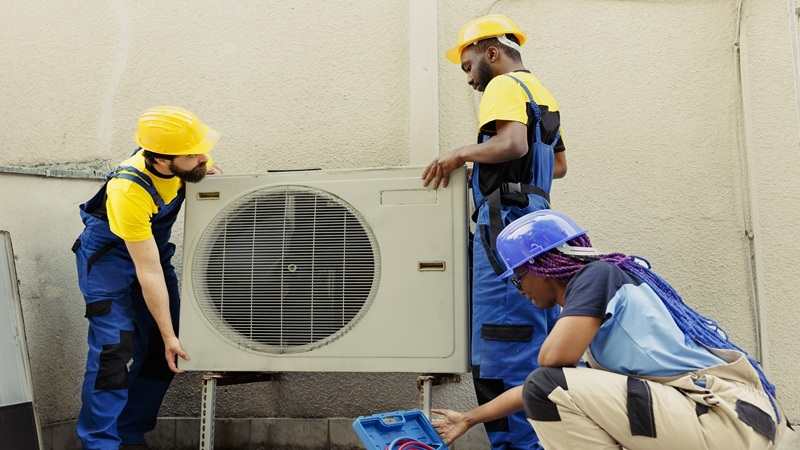
Peak efficiency is not achieved by installing good equipment and hoping it performs forever. Buildings change, filters clog, sensors drift, coils collect debris, and operating schedules shift. For property managers, facility managers, and building owners, those small changes can quietly raise utility costs while comfort becomes harder to control. HVAC companies help prevent that decline by testing how the system actually performs under real building conditions. Their work connects maintenance, diagnostics, airflow, controls, and planning into one practical goal: keeping the system productive without wasting energy, labor, or repair money.
Efficiency Begins With System Visibility
- Small Readings Reveal Larger Waste
An efficient HVAC system needs more than a quick visual check. Contractors begin by measuring how the equipment is operating, including temperatures, pressures, airflow, electrical draw, and cycle behavior. These readings show whether the system is working within the range it was designed to meet. A unit may sound normal and still use too much energy because a motor is strained, a coil is dirty, or airflow is restricted. Careful measurement helps separate real performance from surface impressions. That matters because guesswork usually leads to wasted repairs and missed savings.
- Performance Data Guides Service Decisions
A single reading can be useful, but repeated readings over time are more valuable because they show patterns. If amperage is rising, refrigerant readings are changing, or the temperature split is weakening, contractors can respond before the issue leads to downtime. For owners comparing maintenance options, HVAC companies in the Henderson area can offer a useful example of how local climate demands make measured performance more important than casual seasonal checkups.
- Airflow Testing Protects Cooling And Heating
Airflow is one of the most important factors in HVAC efficiency because conditioned air must move properly through the building. If returns are blocked, ducts are leaking, dampers are misaligned, or filters are overloaded, the equipment may run longer to produce weaker results. HVAC companies check airflow at supply and return points, inspect blower operation, and look for restrictions that increase strain on the system. When airflow is corrected, the system can reach set temperatures with less runtime. This reduces energy use while making comfort more consistent across rooms, floors, and occupied areas.
- Clean Coils Improve Heat Transfer
Dirty coils force HVAC equipment to work harder than necessary. Dust, grease, rooftop debris, landscaping buildup, and airborne particles can reduce heat transfer over time. HVAC companies clean and inspect coils to help the system move heat more efficiently. This work may seem routine, but it has direct financial value. A clean coil can reduce long cycles, improve humidity control, and lower the strain on compressors and fan motors during heavy demand.
- Controls Must Match Building Use
Even well-maintained equipment can waste energy if controls are poorly set. HVAC companies review thermostats, sensors, schedules, lockouts, staging, and zone settings to ensure equipment runs when needed and shuts down when demand drops. Many buildings operate differently than they did when the system was installed. Tenant hours change, spaces are remodeled, occupancy shifts, and some rooms become underused. Control adjustments help the HVAC system align with current operations rather than relying on outdated assumptions. A better control strategy can reduce unnecessary runtime without making occupants uncomfortable or requiring major equipment replacement.
- Preventive Maintenance Reduces Energy Drift
Efficiency often declines slowly, which makes it easy to miss. Preventive maintenance slows that decline by keeping parts clean, adjusted, lubricated, tightened, and tested. HVAC companies inspect belts, bearings, contactors, capacitors, drain lines, filters, motors, and safety controls before larger problems arise. This routine work protects performance because small mechanical issues can increase energy use long before a system fails. For facility teams, preventive maintenance also improves planning.
- Refrigerant Performance Needs Careful Review
Cooling efficiency depends on proper refrigerant operation. Low charge, leaks, poor metering, dirty coils, and airflow problems can all distort refrigerant readings and reduce performance. HVAC companies evaluate refrigerant pressures and temperatures in context rather than treating every weak cooling complaint as a simple refill. This distinction matters because refrigerant is not consumed during normal operation. If the charge is low, there is likely a cause that needs attention. Correct diagnosis protects the compressor, improves cooling output, and prevents repeated service visits tied to the same unresolved condition.
Peak Efficiency Requires Ongoing Attention
HVAC companies keep systems running at peak efficiency by managing the details that most buildings cannot afford to ignore. They measure performance, correct airflow, clean coils, review controls, test electrical parts, inspect ductwork, verify refrigerant operation, and track changing building demands. Each step helps reduce waste and protect comfort before problems become expensive. For property managers, facility managers, and building owners, this work is not just maintenance. It is a practical operating strategy. A system that is measured, adjusted, and maintained with discipline costs less to run and performs more reliably.