
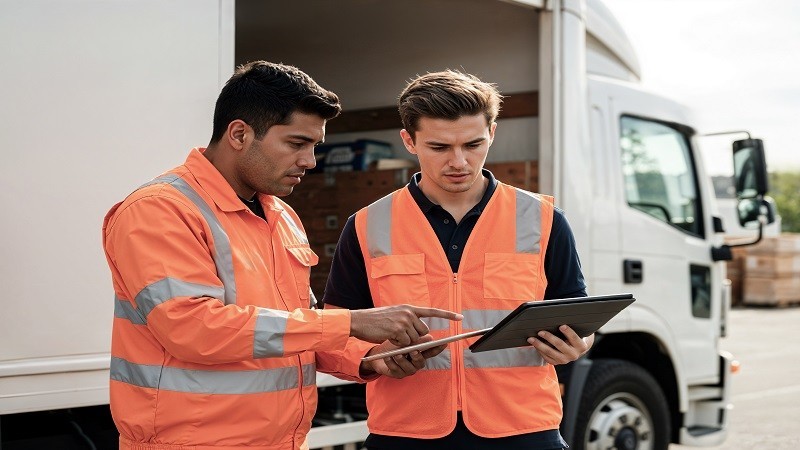
Telematics has become a central part of how transportation operations are monitored and managed in real time. It combines GPS tracking, onboard diagnostics, and wireless communication systems to provide continuous data from vehicles on the road. This information allows fleet managers to observe driving behavior, vehicle health, and route efficiency without needing physical inspections at every stage. By turning raw movement and mechanical signals into actionable insights, trucking organizations can respond faster to risks and operational inefficiencies.
The system also supports better decision-making by giving visibility into patterns that would otherwise remain hidden in manual logs or delayed reports. Over time, this technology has shifted from being an optional add-on to a core operational requirement for many freight operations that prioritize safety, accountability, and regulatory alignment.
Real-Time Fleet Monitoring
1. How Data Tracking Shapes Driver Safety
Telematics systems continuously collect data on speed, braking patterns, acceleration, idle time, and engine performance, helping companies understand how vehicles are operated under real-world conditions. When unsafe driving patterns are detected, alerts can be sent instantly to supervisors, enabling corrective action before accidents occur. This continuous feedback loop encourages more responsible driving habits because operators are aware that their actions are being monitored and recorded. It also helps reduce fatigue-related risks by identifying long driving hours or irregular rest patterns.
Insurance providers often consider telematics data when evaluating risk profiles, which can lead to improved coverage terms for compliant fleets. Trucking Companies in Dallas, TX, have increasingly adopted these systems to manage long-haul routes that pass through congested urban corridors and high-risk highways. The ability to analyze driver behavior at scale makes it easier to design training programs tailored to real operational challenges rather than generic assumptions.
2. Compliance Through Digital Reporting Systems
Regulatory compliance in the transportation sector requires accurate records of driving hours, maintenance schedules, and vehicle inspections. Telematics simplifies this process by automatically generating electronic logs that replace traditional paper-based reporting. These digital records reduce the likelihood of human error while ensuring that fleets remain aligned with transport authority requirements. Authorities can audit data more efficiently when it is stored in structured digital formats, thereby reducing administrative delays during inspections. Maintenance alerts generated by telematics systems also ensure that vehicles are serviced at appropriate intervals, lowering the risk of breakdowns that could violate safety regulations.
Over time, this automated compliance tracking reduces operational stress for managers who would otherwise need to manually verify large volumes of documentation. It also strengthens accountability, as every action is time-stamped and traceable within the system, creating a transparent operational environment that supports both internal governance and external regulatory expectations.
3. Route Optimization and Risk Reduction
One of the most practical applications of telematics is route optimization, which uses live traffic data, road conditions, and delivery schedules to determine the most efficient paths for vehicles. This reduces unnecessary mileage, fuel consumption, and exposure to high-risk areas such as accident-prone intersections or poorly maintained roads. By avoiding congestion and hazardous conditions, fleets can significantly improve both delivery times and driver safety. The system also adjusts recommendations dynamically when unexpected disruptions occur, such as road closures or weather events. This flexibility helps companies maintain consistent service levels even in unpredictable environments.
Additionally, optimized routing reduces driver stress, which indirectly improves decision-making behind the wheel. When routes are planned more intelligently, there is less pressure to rush deliveries, resulting in safer driving behavior overall and improved compliance with operational schedules.
4. Predictive Maintenance and Vehicle Health
Telematics systems monitor engine performance, tire pressure, fuel efficiency, and other mechanical indicators that reflect a vehicle’s overall health. This data enables predictive maintenance, where potential issues are identified before they lead to breakdowns or safety hazards. Instead of relying on scheduled servicing alone, fleet managers can act based on the actual condition of the vehicle. This reduces downtime and prevents mechanical failures that could result in accidents or regulatory violations. Early detection of problems such as brake wear or engine overheating ensures that repairs are handled proactively rather than reactively. Over time, this approach extends vehicle lifespans and improves reliability across the fleet.
It also reduces emergency repair costs and minimizes disruptions to delivery schedules. By maintaining vehicles in optimal condition, transportation companies can ensure that safety standards remain consistently high across all operations.
5. Driver Training and Behavioral Improvement
Telematics data is often used as a foundation for driver coaching programs that focus on real performance metrics rather than theoretical instruction. Supervisors can review driving patterns and provide targeted feedback based on measurable behavior such as harsh braking, excessive speeding, or prolonged idling. This approach makes training more relevant and effective because it is directly connected to daily operations. Drivers can also track their own performance and adjust their habits over time, creating a culture of continuous improvement.
In some cases, incentive programs are introduced to reward safe and efficient driving behaviors identified through telematics data. This not only improves compliance but also strengthens engagement among drivers who feel their efforts are being recognized. As a result, companies build a workforce that is more aware of safety expectations and more capable of maintaining consistent performance under varying road conditions.
6. Incident Detection and Response Systems
Telematics technology plays an important role in quickly identifying and responding to road incidents. When a collision, sudden stop, or unusual vehicle movement is detected, the system can automatically alert fleet managers and emergency responders. This rapid response capability helps reduce the severity of accidents and ensures that assistance reaches drivers as quickly as possible. Recorded data from these incidents also provides valuable insights into the causes of the events, allowing companies to refine safety protocols and prevent similar situations in the future.
Video integration in some systems adds another layer of clarity by providing visual context alongside sensor data. This combination of information supports more accurate incident reconstruction and insurance reporting. Over time, the ability to respond quickly and analyze events thoroughly strengthens overall safety management and reduces operational uncertainty across the fleet.
Telematics has transformed how transportation operations manage safety, compliance, and efficiency by providing real-time visibility into every aspect of fleet performance. From driver behavior monitoring to predictive maintenance and automated reporting, these systems reduce uncertainty and strengthen operational control. The integration of digital tracking tools helps organizations respond faster to risks while maintaining alignment with regulatory requirements. Over time, this leads to safer roads, more reliable delivery systems, and improved accountability across all levels of operation.
As transportation demands continue to grow and regulations become more detailed, the role of telematics will only expand further. It is now a foundational component of modern fleet management rather than an optional enhancement, shaping how companies operate in a highly connected logistics environment.